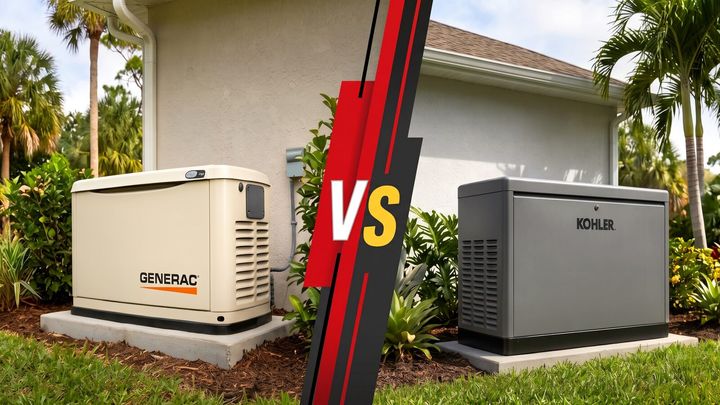
A standby generator and a portable generator both make electricity when the grid is down. That is where the similarity ends. One is an appliance you set up yourself when you need it. The other is a permanent part of the house that works by itself.
Neither is the "right" answer for everyone. This guide walks through the differences that matter in Southwest Florida, so you can decide which one fits your home, your budget and how you live.
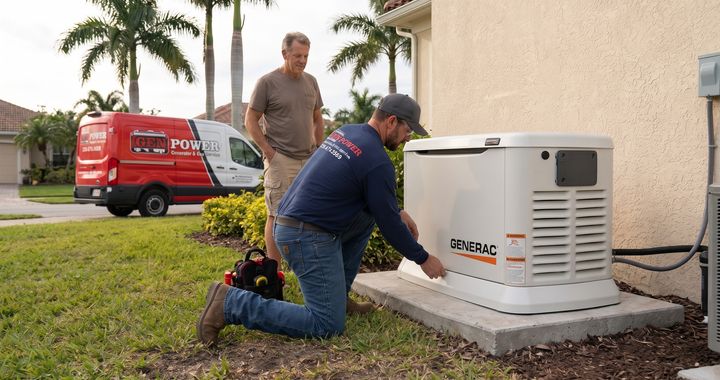
One note before we start: Gen-Power installs and services permanently installed standby generators. We do not sell portables. We still think a portable is the better choice for some households, and we say so below.
How each one starts
Portable. Someone has to be home. You move it outside, add fuel, start it and connect what you want to power. In a storm, that often means doing it in wind and rain, or waiting until conditions are safe.
Standby. An automatic transfer switch senses the outage, starts the generator and moves the home to generator power. When utility power returns, it switches back and shuts down. Nobody has to be there.
For a seasonal home in Naples, Bonita Springs or Marco Island that sits empty through hurricane season, this difference usually decides the question. A portable cannot start itself in an empty house.
Fuel
Portable. Most run on gasoline; some also run on propane cylinders. Gasoline has to be stored safely, it goes stale, and stations can run dry or lose power themselves before and after a hurricane. The unit must be shut down and cooled before you refuel.
Standby. It is connected permanently to natural gas or to a propane tank sized for the home. There is nothing to pour. Our guides on propane vs. natural gas and standby generator fuel consumption explain how to plan the supply.
What each one keeps running
Portable. A selected handful of things: typically the refrigerator, some lights, phone chargers, a fan or a window A/C unit, depending on the generator's size. Central air conditioning is beyond most portables.
Standby. Whatever it was sized for. That can be a set of essential circuits or the whole house with two or three central A/C systems staged by load management. The size comes from the loads you want to protect, not from square footage, which is what generator sizing works out.
In a Florida August, this is the practical line between the two: a portable keeps the food cold; a standby keeps the house cool and dry.
Installation and connection
Portable. The unit needs no installation. How you connect it matters a great deal:
- Extension cords from the generator to each appliance are the simple route.
- To power circuits in your panel, you need a transfer switch or interlock installed by a licensed electrician. Plugging a generator into a wall outlet sends power back out to the utility lines and endangers line workers and your home.
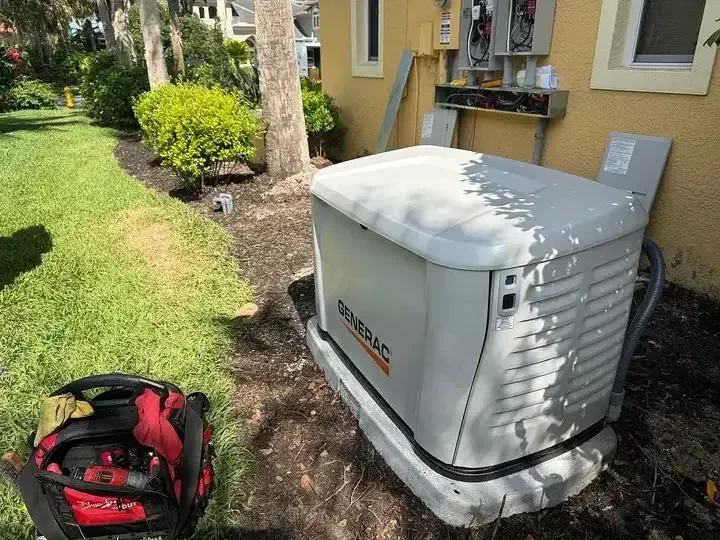
Standby. It is a permitted construction project: a pad, a gas connection, an automatic transfer switch, licensed electrical work, inspections and, in many communities, HOA approval. Our guides on permits and placement in Lee County and HOA approval cover the paperwork.
Safety
Portable. Carbon monoxide is the serious risk. A portable must run outdoors, well away from doors, windows and vents, and never in a garage, lanai or carport, even with the door open. Add working CO alarms inside the house. Keep the unit dry and let it cool before refueling.
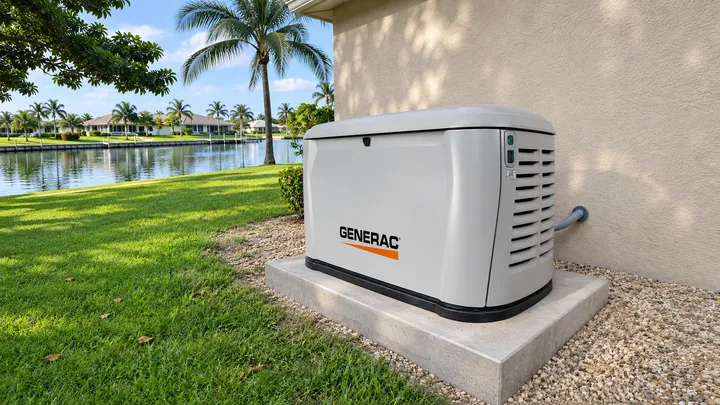
Standby. It sits outside permanently at the clearances required by the manufacturer and the building code, and an inspector checks the placement. It still needs care: annual maintenance keeps it ready to start.
Cost
Portable. A much lower purchase price. Budget also for fuel, safe fuel storage, heavy-duty cords and, if you want it tied into your panel, the electrician's work.
Standby. A larger investment that includes equipment, transfer switch, gas work, permits and installation. We publish one starting price and explain what moves it in our guide to whole-house generator cost in Southwest Florida. The real number for your property comes from a written proposal after a site visit.
Who each one is right for
A portable is a sensible choice if:
- You rent, or your condo association does not allow permanent equipment.
- Your budget does not stretch to an installed system right now.
- You are home during storm season and physically able to set it up and refuel it.
- Keeping the refrigerator, lights and a fan running is enough for you.
A standby system is the better fit if:
- You want central air conditioning and the full house running.
- The home is empty part of the year.
- Someone in the household depends on powered medical equipment or cannot tolerate heat.
- You do not want to store gasoline or run cords in a storm.
- You work from home or run a business from the property.
Questions to ask yourself
- Who will be home when the power goes out, and can they set up a generator safely?
- What do you need running: the essentials, or everything?
- How long could you comfortably manage on the essentials alone?
- Is natural gas available at your street, or do you have room for a propane tank?
- What do your HOA rules say about exterior equipment?
If a standby system sounds right, start with a free on-site assessment
A site visit turns the general comparison into answers for your property. We calculate the loads you want to protect, check your gas or propane options, review permits and HOA requirements, confirm where the unit can sit, and give you a written proposal with the model, the transfer switch and the price.
Gen-Power is a family-owned Generac PowerPro Premier dealer based in Fort Myers, serving Lee, Collier and Charlotte counties with our own licensed technicians (Florida electrical license EC13008563 and gas license LI45179). Book your free on-site assessment or see how our installation process works.